

As a supplier of GRP Insulation Tanks, I've often been asked about the seismic resistance of these remarkable storage solutions. In this blog, I aim to provide a detailed scientific explanation of what seismic resistance means for GRP Insulation Tanks, how it's achieved, and why it's crucial in various applications.
Understanding Seismic Resistance
Seismic resistance refers to the ability of a structure to withstand the forces generated by an earthquake. Earthquakes produce ground motions that can subject structures to various types of forces, including horizontal and vertical forces, as well as torsional forces. For GRP Insulation Tanks, which are used to store a wide range of substances such as water, chemicals, and food products, seismic resistance is of utmost importance to prevent damage, leakage, and potential environmental and safety hazards.
Factors Affecting Seismic Resistance of GRP Insulation Tanks
Material Properties
GRP, or Glass Reinforced Plastic, is a composite material made of a polymer matrix reinforced with glass fibers. The material properties of GRP play a significant role in the seismic resistance of the tanks. GRP has a high strength-to-weight ratio, which means it can withstand large forces while being relatively lightweight. This is beneficial during an earthquake as it reduces the inertial forces acting on the tank. Additionally, GRP has good ductility, allowing it to deform to some extent without fracturing, which helps in absorbing and dissipating seismic energy.
Tank Design
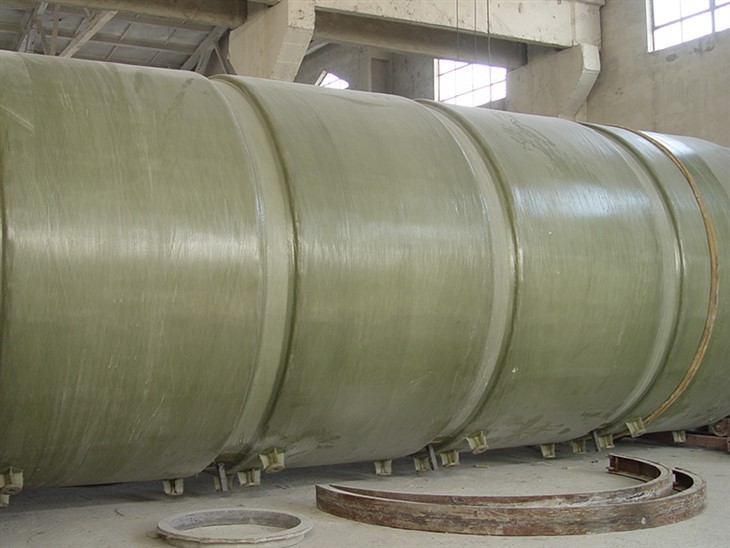
The design of the GRP Insulation Tank also affects its seismic resistance. The shape, size, and wall thickness of the tank are important considerations. Cylindrical tanks are generally more seismically stable than rectangular tanks due to their uniform stress distribution. The wall thickness of the tank is designed to withstand the expected seismic forces based on the location and seismic zone of the installation. Reinforcements such as ribs and stiffeners can be added to the tank to enhance its structural integrity and seismic resistance.
Foundation and Anchoring
The foundation and anchoring of the GRP Insulation Tank are critical for its seismic resistance. A proper foundation provides a stable base for the tank and helps in transferring the seismic forces to the ground. The foundation should be designed to withstand the weight of the tank and its contents, as well as the seismic forces. Anchoring systems are used to secure the tank to the foundation and prevent it from sliding or overturning during an earthquake. The type of anchoring system depends on the size and weight of the tank, as well as the seismic conditions of the site.
Testing and Certification
To ensure the seismic resistance of GRP Insulation Tanks, they are subjected to various testing procedures. These tests simulate the seismic forces that the tank may experience during an earthquake and evaluate its performance. Some of the common tests include shake table tests, where the tank is placed on a shake table that can replicate different types of ground motions, and finite element analysis, which uses computer simulations to predict the behavior of the tank under seismic loading.
In addition to testing, GRP Insulation Tanks may also be certified to meet certain seismic standards. These standards specify the requirements for the design, construction, and installation of the tanks to ensure their seismic resistance. For example, the American Society of Civil Engineers (ASCE) has developed standards for the seismic design of tanks, which are widely used in the industry.

Importance of Seismic Resistance in Different Applications
Water Storage
In areas prone to earthquakes, water storage is crucial for emergency response and recovery. GRP Insulation Tanks used for water storage need to be seismically resistant to ensure that they can continue to provide a reliable source of water after an earthquake. Damage to water storage tanks can lead to water shortages, which can have a significant impact on public health and safety.
Chemical Storage
GRP Insulation Tanks are also used for storing various chemicals. A seismic event can cause damage to these tanks, leading to the release of hazardous chemicals into the environment. This can pose a serious threat to human health and the environment. Therefore, seismic resistance is essential for chemical storage tanks to prevent leaks and spills.
Food and Beverage Industry
In the food and beverage industry, GRP Insulation Tanks are used for processes such as fermentation and storage. For example, FRP Soy Sauce Fermentation Tank is an important equipment in the soy sauce production process. Seismic resistance is important to ensure the integrity of the tanks and prevent contamination of the food products. Any damage to the tanks can lead to the loss of valuable products and potential food safety issues.
Conclusion
In conclusion, the seismic resistance of GRP Insulation Tanks is a complex but important aspect of their design and performance. It involves considerations of material properties, tank design, foundation and anchoring, as well as testing and certification. Seismic resistance is crucial in various applications, including water storage, chemical storage, and the food and beverage industry, to ensure the safety and reliability of the tanks.
If you are interested in purchasing GRP Insulation Tanks and want to discuss your specific requirements and the seismic resistance aspects, please feel free to contact us for a detailed consultation. We are committed to providing high-quality tanks that meet your needs and ensure the safety of your operations.
References
- American Society of Civil Engineers (ASCE). Seismic Design of Liquid Storage Tanks.
- International Organization for Standardization (ISO). Standards related to composite materials and tank design.
- Industry reports on the performance of GRP Insulation Tanks in seismic events.