

What is the Format of GRP Profiles?
GRP, or Glass Reinforced Plastic, profiles are a versatile and increasingly popular choice in various industries due to their numerous advantages. As a GRP profiles supplier, I have witnessed firsthand the growing demand for these products and understand the importance of providing detailed information about their format.
Understanding GRP Profiles
GRP profiles are composite materials made from a combination of glass fibers and a polymer resin. The glass fibers provide strength and stiffness, while the resin acts as a matrix to hold the fibers together. This combination results in a material that is lightweight, corrosion-resistant, and has excellent mechanical properties.
There are two main manufacturing processes for GRP profiles: pultrusion and molding.
Pultruded profiles are produced by pulling continuous glass fibers through a resin bath and then through a heated die to cure the resin. This process allows for the production of profiles with a constant cross-section and high strength-to-weight ratio.

Molded profiles, on the other hand, are made by placing a pre-cut glass fiber mat into a mold and then injecting resin into the mold. This process is suitable for producing profiles with complex shapes and designs.
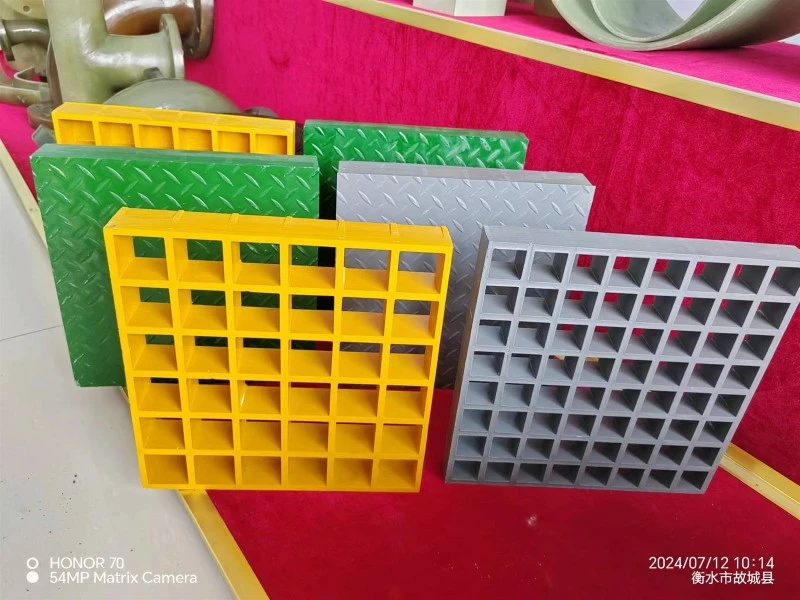
Format of GRP Profiles
The format of GRP profiles can vary depending on the application and the manufacturing process used. Here are some common formats:
- Standard Shapes: GRP profiles are available in a variety of standard shapes, such as angles, channels, I-beams, and tubes. These shapes are commonly used in construction, infrastructure, and industrial applications. For example, Fiberglass Reinforcing Bars, GRP Angle, I-beam and Other Pultruded Profiles are widely used in the construction industry for reinforcing concrete structures.
- Custom Shapes: In addition to standard shapes, GRP profiles can also be custom-made to meet specific requirements. This is particularly useful for applications where a unique shape or design is needed. For example, GRP cable trunking is often custom-made to fit the specific dimensions and requirements of a cable management system. You can find more information about GRP Cable Trunking on our website.
- Accessories: GRP profiles are often used in conjunction with accessories to enhance their functionality. For example, Fiberglass Cover can be used to protect GRP profiles from environmental factors and provide a finished look. These accessories are available in a variety of sizes and designs to suit different applications.
Advantages of GRP Profiles

GRP profiles offer several advantages over traditional materials, such as steel and aluminum. Here are some of the key benefits:
- Lightweight: GRP profiles are significantly lighter than steel and aluminum, making them easier to handle and install. This can result in lower transportation costs and reduced installation time.
- Corrosion-resistant: GRP profiles are highly resistant to corrosion, making them suitable for use in harsh environments. This can extend the lifespan of the profiles and reduce maintenance costs.
- High Strength: Despite their lightweight, GRP profiles have high strength and stiffness. This makes them suitable for use in applications where structural integrity is important.
- Design Flexibility: GRP profiles can be easily molded into a variety of shapes and designs, allowing for greater design flexibility. This can be particularly useful for applications where a unique or complex shape is required.
- Low Maintenance: GRP profiles require minimal maintenance compared to traditional materials. They do not require painting or coating, and they are resistant to UV radiation and chemical damage.
Applications of GRP Profiles
GRP profiles are used in a wide range of applications across various industries. Here are some common applications:
- Construction: GRP profiles are used in the construction industry for a variety of applications, such as structural reinforcement, roofing, and cladding. They are also used in the manufacture of prefabricated buildings and modular structures.
- Infrastructure: GRP profiles are used in infrastructure projects, such as bridges, tunnels, and water treatment plants. They are also used in the manufacture of utility poles and transmission towers.
- Industrial: GRP profiles are used in industrial applications, such as chemical processing plants, food processing facilities, and pharmaceutical manufacturing plants. They are also used in the manufacture of storage tanks and pipes.
- Marine: GRP profiles are used in the marine industry for a variety of applications, such as boat building, dock construction, and offshore platforms. They are also used in the manufacture of marine accessories, such as fenders and bumpers.
- Transportation: GRP profiles are used in the transportation industry for a variety of applications, such as automotive components, railway carriages, and aerospace structures. They are also used in the manufacture of sports equipment, such as bicycles and kayaks.
Contact for Procurement
If you are interested in purchasing GRP profiles for your project, we would be happy to discuss your requirements and provide you with a quote. Our team of experts has extensive experience in the GRP industry and can help you choose the right profiles for your application. We offer a wide range of GRP profiles, including standard shapes, custom shapes, and accessories. We also provide installation and maintenance services to ensure that your GRP profiles are installed correctly and perform optimally.
To get in touch with us, please visit our website or contact our sales team. We look forward to hearing from you and working with you on your next project.
References
- "Composite Materials: Design and Applications" by David Hull and T. W. Clyne
- "Fiberglass Reinforced Plastic Handbook" by James R. Whittaker
- "Pultrusion: Technology, Materials, and Applications" by John Summerscales