

Hey there! As a supplier of GRP (Glass Reinforced Plastic) services, I often get asked about how we handle version control of data. It's a crucial aspect of our work, especially when dealing with complex projects and multiple stakeholders. In this blog post, I'll walk you through our process and share some insights on why it matters.
Why Version Control of Data is Important
First off, let's talk about why version control is such a big deal. When you're working on GRP projects, you're dealing with a ton of data. This includes design specifications, material requirements, manufacturing processes, and quality control records. All of this data needs to be accurate, up - to - date, and accessible to everyone involved in the project.
Without proper version control, you can run into a whole host of problems. For example, if different team members are working with different versions of a design file, it can lead to errors in manufacturing. Or, if a change is made to a material specification but not properly documented and shared, it can compromise the quality of the final product.
Our Approach to Version Control
At our GRP service, we've developed a comprehensive approach to version control that ensures the integrity and accessibility of our data. Here's how it works:
1. Centralized Data Repository
We use a centralized data repository to store all our project - related data. This repository acts as a single source of truth for everyone involved in the project. Whether it's the design team, the manufacturing department, or the quality control team, they can all access the latest version of the data from this central location.
The repository is organized in a logical manner, with different folders for different types of data. For example, we have separate folders for design files, material specifications, and manufacturing instructions. This makes it easy for team members to find the data they need quickly.
2. Version Numbering System
We implement a strict version numbering system for all our data files. Each time a change is made to a file, a new version number is assigned. The version numbering follows a simple pattern, such as major.minor.revision.
The major version number is incremented when there are significant changes to the file, such as a complete redesign of a product. The minor version number is incremented when there are smaller changes, like adding a new feature or modifying an existing one. The revision number is incremented for minor corrections, such as fixing a typo or a small error in a calculation.
For example, if the initial version of a design file is 1.0.0, and a new feature is added, the version number will be updated to 1.1.0. If a typo is later fixed, the version number will become 1.1.1.
3. Change Tracking and Documentation
We keep a detailed record of all changes made to our data files. Every time a change is made, the person making the change has to document what was changed, why it was changed, and when it was changed. This documentation is stored alongside the file in the repository.
This change tracking and documentation process is essential for transparency and accountability. It allows us to understand the history of a file and why certain decisions were made. It also helps us to identify and resolve any issues that may arise due to changes.

4. Access Control and Permissions
To ensure the security of our data, we have a strict access control and permissions system in place. Only authorized personnel can access and make changes to the data. Different levels of access are assigned based on the role of the person in the project.
For example, the design team may have full access to the design files and be able to make changes as needed. The manufacturing department may have read - only access to the design files but can make changes to the manufacturing instructions. This helps to prevent unauthorized changes to the data and ensures that only the right people are making decisions about the data.
Integration with Project Workflow
Our version control system is tightly integrated with our project workflow. Here's how it fits into the different stages of a GRP project:
Design Phase
During the design phase, the design team creates and modifies design files in the centralized repository. As they make changes, they follow the version numbering system and document all the changes. The other team members, such as the manufacturing and quality control teams, can review the latest versions of the design files and provide feedback.
Manufacturing Phase
In the manufacturing phase, the manufacturing team accesses the latest version of the manufacturing instructions from the repository. They use these instructions to produce the GRP products. If any issues arise during manufacturing that require changes to the instructions, the manufacturing team can request a change. The design team then reviews the request, makes the necessary changes, and updates the version number of the instructions.
Quality Control Phase
The quality control team uses the data in the repository to check the quality of the manufactured products. They compare the actual products against the design specifications and manufacturing instructions. If they find any discrepancies, they can refer to the change history in the repository to understand why the differences exist.
Real - World Examples
Let me share a couple of real - world examples to illustrate how our version control system has helped us in our GRP projects.
One time, we were working on a project to manufacture FRP Chimney and GRP Ductwork. The design team made a significant change to the design of the ductwork to improve its efficiency. Thanks to our version control system, they were able to document the change, assign a new version number to the design file, and notify the manufacturing team. The manufacturing team was then able to access the latest version of the design file and make the necessary adjustments to the manufacturing process. This ensured that the final product met the new design requirements without any delays.
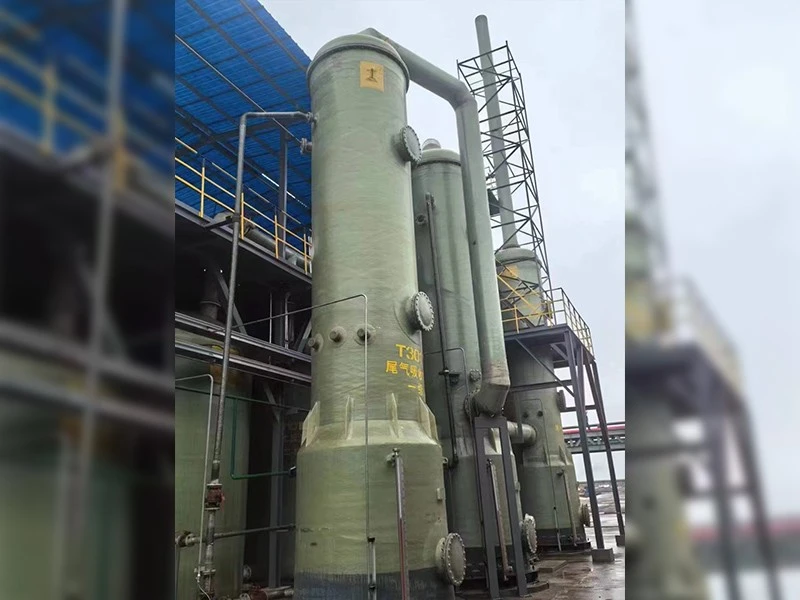
Another example is when we were manufacturing a GRP Scrubber. During the quality control phase, the team noticed a small issue with the material used in one part of the scrubber. By referring to the change history in the repository, they were able to trace back the source of the problem to a minor change in the material specification. The design team was then able to quickly make the necessary corrections and update the version number of the material specification.
Conclusion
In conclusion, version control of data is a critical part of our GRP service. Our approach, which includes a centralized data repository, a version numbering system, change tracking and documentation, and access control, ensures the integrity, accessibility, and security of our data.
By integrating version control into our project workflow, we're able to minimize errors, improve communication between teams, and deliver high - quality GRP products on time.
If you're in the market for GRP services, whether it's for FRP Chimney and GRP Ductwork, GRP Scrubber, or GRP Bubble Tower, we'd love to have a chat with you. Our version - controlled data management system is just one of the many ways we ensure top - notch quality in our products and services. Feel free to reach out to us to start a procurement discussion.
References
- Software Engineering: A Practitioner's Approach, Roger S. Pressman
- Data Management for Engineering Projects, John A. Doe